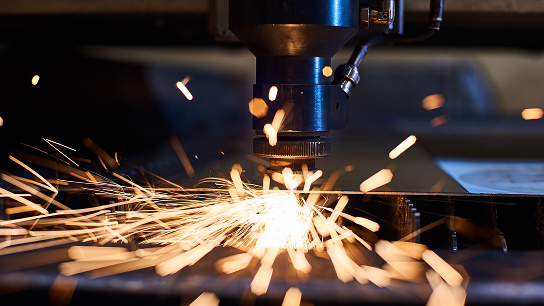

Handheld laser welding machines have gone from trade-show curiosity to shop-floor reality in just a few years. Walk through any metal fabrication expo today and you will see booth after booth demonstrating fiber laser welding on stainless steel, mild steel, aluminum, and galvanized sheet. The results look impressive: clean, narrow weld beads with almost no discoloration, minimal distortion, and speeds that leave TIG welding in the dust.
But impressive demos do not answer the questions that matter to someone running a production floor or managing a distribution business. Is laser welding actually better than MIG or TIG for the work you do? Where does it genuinely outperform traditional welding, and where does it fall short? What does a laser welding machine really cost to own and operate once the novelty wears off?
This article puts laser welding side by side with TIG welding, MIG welding, and other traditional processes in a detailed, honest comparison. We cover the technology, the applications where laser welding delivers a clear advantage, the situations where traditional welding is still the better choice, and the practical economics of making the switch. No hype — just the information you need to make a sound equipment decision.
How Laser Welding Actually Works (And Why It Behaves Differently)
Before comparing laser welding to traditional processes, it helps to understand why a laser welding machine produces such different results.
A fiber laser welding machine generates a highly focused beam of coherent light at a wavelength of approximately 1,070 nm. This beam travels through a fiber optic delivery cable to a handheld welding head (for manual laser welding) or a fixed/robotic welding head (for automated systems). At the focal point, the laser beam concentrates energy into a spot roughly 0.2–1.0 mm in diameter, creating an extremely high energy density on the metal surface.
This concentrated energy heats the metal so rapidly that a very narrow zone melts while the surrounding material stays relatively cool. The result is a weld with a narrow heat-affected zone (HAZ), typically 0.3–1.0 mm wide, compared to 3–8 mm for conventional TIG welding and 2–5 mm for MIG welding. The narrow HAZ is the root cause of most of the advantages — and some of the limitations — of laser welding.
Handheld fiber laser welding machines typically operate at 1,000W to 3,000W of laser power. The operator holds a lightweight welding head and moves it along the joint at speeds of 2–6 meters per minute. A wobble function (the laser beam oscillates rapidly in a small circular or figure-8 pattern) widens the effective weld bead and improves tolerance to joint fit-up gaps. An integrated wire feeder is available on most machines for joints that require filler material or gap bridging.
Automated laser welding systems, typically integrated with robotic arms, use the same fiber laser sources but at power levels ranging from 1 kW to 10+ kW, with precise seam tracking and programmable weld paths. These systems are standard in automotive, appliance, and battery manufacturing.
Laser Welding vs. TIG Welding: A Head-to-Head Comparison
TIG welding (GTAW) is the traditional benchmark for high-quality welding. It produces clean, precise welds and gives the operator exceptional control. For decades, TIG has been the default process whenever weld appearance and metallurgical quality matter. So how does laser welding compare?
Speed
This is where the gap is most dramatic. On a typical joint — say, a butt weld on 1.5 mm stainless steel — a skilled TIG welder might travel at 150–300 mm per minute. A handheld laser welding machine covers the same joint at 1,500–3,000 mm per minute, roughly 5–10 times faster. On longer seams, this speed difference translates directly into labor savings. A fabricator producing stainless steel kitchen equipment reported reducing weld labor on sink basin assemblies by 70% after switching from TIG to handheld laser welding.
Heat Input and Distortion
Because laser welding deposits energy so quickly into such a narrow zone, the total heat input per unit length of weld is substantially lower than TIG welding. This means less thermal expansion, less contraction during cooling, and therefore less distortion of the workpiece. For thin stainless steel panels (0.5–2.0 mm), laser welding virtually eliminates the warping that TIG welding inevitably produces. This is one of the most compelling reasons fabricators switch to laser welding: not just the speed, but the dramatic reduction in post-weld straightening and rework.
Weld Appearance
A well-executed TIG weld on stainless steel produces the iconic stacked-dime pattern that many welders take pride in. Laser welds look different — they produce a narrow, smooth, slightly concave bead with very little discoloration on either side. On stainless steel with nitrogen back-shielding, a laser weld can be nearly invisible. Neither appearance is objectively better; they are simply different. For products where a visible weld pattern is desirable (craft metalwork, some architectural features), TIG retains an aesthetic edge. For products where the goal is a clean, unobtrusive weld (kitchen equipment, enclosures, consumer products), laser welding has the advantage.
Skill Requirements
TIG welding demands significant operator skill. Coordinating torch angle, filler rod feed, travel speed, and foot pedal simultaneously takes months to learn and years to master. Laser welding has a much shorter learning curve. Most operators become productive with a handheld laser welding machine within 1–3 days of training. The machine controls the energy input; the operator’s primary job is to maintain consistent travel speed and point the beam at the joint. This lower skill barrier is a significant practical advantage in the current labor market, where experienced TIG welders are increasingly difficult to recruit and retain.
Joint Fit-Up Tolerance
This is one area where TIG welding has a genuine advantage. A skilled TIG welder can bridge gaps, fill misaligned joints, and add extra filler material to compensate for imperfect fit-up. Laser welding is less forgiving. The narrow beam and high travel speed mean that gaps larger than about 0.5 mm (without wobble) or 1.0–1.5 mm (with wobble and wire feed) cannot be reliably bridged. This means that parts going to a laser welding machine must be cut and formed to tighter tolerances than parts intended for TIG welding. For shops with a good laser cutting machine and press brake, this is usually not a problem. For shops working with manually prepared components, the tighter fit-up requirement can be a real constraint.
Laser Welding vs. MIG Welding: Where Each Process Wins
MIG welding (GMAW) is the production workhorse of the welding industry. It is fast, tolerant of joint fit-up variation, and easy to automate. Comparing laser welding to MIG welding highlights a different set of trade-offs than the TIG comparison.
Thin Material Performance
On sheet metal from 0.5 mm to 3.0 mm, laser welding is significantly cleaner and produces far less distortion than MIG welding. MIG welding on thin stainless steel or aluminum almost always produces some degree of burn-through risk, warping, or excessive spatter that requires cleanup. Laser welding handles these thin materials with ease and produces edges that need little to no post-processing. For thin material applications, laser welding is the clear winner.
Thick Material and Structural Joints
For joints on material above 4–5 mm, especially structural joints requiring full penetration or multi-pass welds, MIG welding remains the more practical and economical choice. A handheld laser welding machine at 2–3 kW is limited to single-pass welds with effective penetration of roughly 3–4 mm. MIG welding can fill large joints, handle thick plate, and deposit large volumes of weld metal efficiently. In structural fabrication, MIG welding is not going anywhere.
Spatter and Post-Weld Cleanup
MIG welding, particularly on mild steel with CO₂-rich gas mixtures, produces spatter that adheres to the workpiece, fixtures, and surrounding surfaces. This spatter must be removed by grinding, chipping, or chemical treatment before the part can be painted or shipped. Laser welding produces virtually zero spatter. For products where post-weld cleanup represents a significant labor cost — such as metal furniture, consumer appliances, and enclosures — the elimination of spatter removal alone can justify the laser welding investment.
Automation Comparison
Both MIG welding and laser welding integrate well with robotic automation. MIG welding robots are mature technology with decades of field deployment. Laser welding robots are newer but offer advantages in speed and minimal post-weld processing. In automotive battery module assembly and appliance manufacturing, laser welding robots have largely replaced MIG robots for seam welding on thin components because they produce cleaner results at higher speed.
Side-by-Side Comparison: Laser Welding vs. Traditional Welding Processes
The following table consolidates the key performance differences between laser welding and the two most common traditional welding processes across the parameters that affect real production decisions:
| Parameter | Handheld Laser Welding | TIG Welding | MIG Welding |
| Typical Travel Speed | 1,500–4,000 mm/min | 100–300 mm/min | 300–800 mm/min |
| Heat Affected Zone | 0.3–1.0 mm | 3–8 mm | 2–5 mm |
| Distortion on 1.5 mm SS | Minimal to none | Moderate to severe | Moderate |
| Max Effective Penetration | 3–4 mm (single pass) | 6+ mm (multi-pass) | 10+ mm (multi-pass) |
| Gap Bridging Tolerance | 0.5–1.5 mm (with wobble/wire) | Up to 3 mm | Up to 2 mm |
| Filler Material | Optional (wire feeder) | Separate rod (manual) | Continuous wire (auto) |
| Shielding Gas | Argon or Ar/N₂ mix | Pure Argon | Ar/CO₂ mix or CO₂ |
| Spatter | Virtually none | None | Moderate to heavy |
| Post-Weld Cleanup | Minimal | Minimal | Grinding / spatter removal |
| Operator Training Time | 1–3 days | 3–6 months | 2–4 weeks |
| Best Thickness Range | 0.5–4 mm | 0.3–6+ mm | 1–25+ mm |
| Equipment Cost (typical) | $8,000–$25,000 | $2,000–$8,000 | $2,000–$15,000 |
This table makes a critical point visible: laser welding does not replace traditional welding across the board. It dominates a specific zone — thin to medium material, appearance-critical products, high-volume production, and applications where minimal distortion is essential. Outside that zone, TIG and MIG welding remain the right tools for the job.
Where Laser Welding Delivers the Strongest ROI
Not every welding application benefits equally from switching to laser welding. The return on investment is strongest in applications that combine several of the following characteristics:
• Thin stainless steel or aluminum (0.5–3 mm): The distortion advantage is most dramatic on thin material. If your current process involves significant post-weld straightening, grinding, or rework on thin stainless parts, laser welding will likely produce the fastest payback.
• High weld length per part: Products with long seam welds — kitchen sinks, enclosures, tanks, ductwork — benefit most from the 5–10x speed advantage of laser welding over TIG. A part with 2 meters of total weld length that takes 40 minutes by TIG might take 5–8 minutes with a laser welding machine.
• Visible weld appearance matters: Consumer products, architectural metalwork, food equipment, and medical devices all require welds that look clean. Laser welding eliminates the post-weld polishing and grinding that these products often demand after TIG or MIG welding.
• High production volume: The speed advantage compounds at volume. A shop welding 100 identical enclosures per day saves far more aggregate labor time than a shop welding 5 per day.
• Skilled welder shortage: If hiring and retaining experienced TIG welders is a bottleneck for your business, laser welding machines allow less experienced operators to produce consistent, high-quality welds after minimal training.
• Galvanized steel welding: MIG welding on galvanized steel produces heavy fume and spatter. Laser welding on galvanized material is significantly cleaner, though proper ventilation and fume extraction remain essential.
Applications Where Traditional Welding Is Still the Better Choice
Intellectual honesty requires acknowledging where laser welding is not the right tool. If you are evaluating a laser welding machine purchase, these are the scenarios where you should expect to continue using TIG or MIG welding:
• Thick structural joints (>5 mm): Multi-pass welds, full-penetration groove welds on heavy plate, and large fillet welds are MIG welding territory. A handheld laser welding machine does not have the penetration or deposition rate for these joints.
• Field welding and site work: Laser welding machines require a stable power supply, a clean working environment, and cannot be used outdoors in rain or dusty conditions. Stick welding and MIG welding dominate field work for good reason.
• Poor fit-up parts: If your upstream processes (cutting, forming, assembly) produce joints with gaps exceeding 1–1.5 mm, a laser welding machine will struggle. TIG welding’s ability to bridge gaps and add filler manually is an essential safety net for imprecise parts.
• Pipe welding and pressure work: Coded pipe welding to ASME or AWS standards typically requires TIG root passes and MIG fill passes with specific WPS (Welding Procedure Specification) qualifications. Laser welding procedures for pressure-critical applications are not yet as widely standardized or accepted by inspection bodies.
• Very thick aluminum and copper alloys: While fiber laser welding handles thin aluminum well, thick aluminum joints (>4 mm) and copper alloy joints still favor TIG welding (AC for aluminum) or MIG welding due to the high thermal conductivity and reflectivity of these materials.
• Budget constraints on low-volume work: If your welding volume is low and your current TIG or MIG equipment meets quality requirements, the capital investment in a laser welding machine may not pay back within a reasonable timeframe. Laser welding ROI is driven by volume and labor savings.
Real Cost Breakdown: What a Laser Welding Machine Actually Costs to Own
One of the most common questions from buyers considering laser welding is about real-world operating economics. Here is a transparent breakdown of what a handheld fiber laser welding machine costs to purchase and operate, compared to a TIG welding setup doing equivalent work.
| Cost Category | Handheld Laser Welding (2 kW) | TIG Welding (250A AC/DC) |
| Equipment Purchase | $10,000–$22,000 | $3,000–$8,000 |
| Installation | Minimal (plug & play, 220V single-phase) | Minimal (plug & play) |
| Shielding Gas (Argon) | ~$3–5/hr | ~$2–4/hr |
| Welding Wire / Filler Rod | ~$1–2/hr (if using wire feeder) | ~$2–5/hr (manual rod) |
| Electricity | ~$1.5–3/hr (total system ~5–8 kW) | ~$0.5–1/hr (total ~2–4 kW) |
| Nozzle / Protective Lens | ~$0.5–1/hr (averaged) | Ceramic cups, collets: ~$0.2/hr |
| Total Operating Cost/hr | ~$6–11/hr | ~$5–10/hr |
| Effective Weld Speed | 5–10x faster than TIG | Baseline (1x) |
| Cost per Meter of Weld | Significantly lower (speed advantage) | Higher (slow travel speed) |
| Operator Wage (typical) | $15–25/hr (general fabricator) | $25–45/hr (skilled TIG welder) |
| Training Investment | 1–3 days | 3–6 months |
The hourly operating costs are surprisingly similar. The economic advantage of laser welding does not come from cheaper consumables — it comes from three compounding factors: dramatically faster welding speed (meaning more parts per shift), lower operator wage requirements (general fabricators rather than specialist TIG welders), and reduced post-weld processing (less grinding, straightening, and polishing). When you factor these together, the cost per finished weld or cost per completed part is typically 40–70% lower with laser welding on suitable applications.
Payback periods vary widely depending on utilization. A shop running a laser welding machine 6–8 hours per day on production work typically sees payback within 6–18 months. A shop using it intermittently for occasional jobs may take 2–3 years. The calculation is straightforward: estimate the labor hours saved per week, multiply by the loaded labor cost, and divide the machine price by the weekly savings.
Safety Considerations for Laser Welding Machines
Laser welding introduces safety requirements that do not exist with traditional arc welding. Anyone evaluating a laser welding machine must understand and plan for these.
Laser Radiation Hazard
A fiber laser operating at 1–3 kW emits invisible infrared radiation that can cause instant, permanent eye injury and severe skin burns. This is the most critical safety difference between laser welding and traditional welding. Every person in the vicinity of a laser welding operation must wear laser safety eyewear rated for the specific wavelength (1,070 nm for fiber lasers) and optical density (OD 5+ for kilowatt-class lasers). Standard welding helmets do not protect against laser radiation. Dedicated laser welding helmets with certified laser-blocking filters are required.
Enclosed vs. Open Operation
Automated laser welding systems are typically fully enclosed in Class 1 laser safety enclosures with interlocked doors, making them inherently safe during operation. Handheld laser welding machines, however, operate in open environments where beam reflections and stray radiation are potential hazards. Best practice for handheld laser welding includes designating a controlled laser area, posting warning signs, and ensuring that all persons in the area wear appropriate protection. Many jurisdictions require a designated Laser Safety Officer (LSO) for Class 4 laser operations.
Fume Extraction
Laser welding produces metal fumes similar to traditional welding, though often in lower volume due to the smaller weld pool. Local exhaust ventilation or a portable fume extraction unit positioned near the welding head is recommended for all laser welding operations. On galvanized steel and coated materials, fume extraction is especially important because of the zinc and coating combustion products generated.
Fire Risk
The laser beam can ignite flammable materials in the work area. Maintaining a clean, organized workspace free of paper, cardboard, solvents, and other combustibles is essential. A fire extinguisher should be immediately accessible in every laser welding work area.
Choosing the Right Laser Welding Machine: Power, Features, and What to Watch For
If you have decided that laser welding fits your application profile, here are the practical factors to consider when selecting a machine:
Laser Power
For most handheld laser welding applications on sheet metal from 0.5 mm to 3 mm, a 1,500W to 2,000W machine provides the best balance of capability, cost, and portability. A 1,000W machine works well on very thin material (0.5–1.5 mm) but runs out of power on 3 mm stainless steel with nitrogen. A 3,000W machine handles heavier work but generates more heat and costs more. Avoid the temptation to buy maximum power “just in case” — overpowered machines are harder to control on thin material and cost more to operate.
Air-Cooled vs. Water-Cooled
Laser welding machines under approximately 1,500W can be air-cooled, making them lighter and simpler. Machines at 2,000W and above typically require water cooling (an integrated chiller) to maintain stable laser source temperature during continuous operation. Water-cooled machines are larger and require periodic coolant maintenance, but they offer better duty cycle performance for production use.
Wobble Function and Wire Feeder
A wobble welding function (beam oscillation) is nearly essential for practical handheld laser welding. It widens the effective weld bead, improves gap tolerance, and produces a more aesthetically pleasing weld appearance. An integrated wire feeder is important for joints that require filler material or when bridging gaps. Verify that the wire feeder is compatible with common filler wire diameters (0.8 mm and 1.0 mm are standard).
Build Quality and Reliability
The laser source is the most expensive component. Machines using branded fiber laser sources from established manufacturers (IPG, Raycus, MAX, JPT) tend to offer better beam quality, longer life, and more reliable warranty support than machines with unbranded or unknown laser sources. Also evaluate the welding head build quality, the cable assembly durability, and the control system interface. A laser welding machine that breaks down or degrades in beam quality after a few months is a poor investment regardless of the purchase price.
After-Sales Support
Laser welding machines are more technically complex than TIG or MIG machines. When something goes wrong, you need a supplier with genuine laser expertise, not just a general equipment distributor. Evaluate the manufacturer’s technical support capability, spare parts availability, and willingness to provide remote diagnostics and troubleshooting. This is especially important for customers purchasing machines through distributors — make sure the distribution chain can deliver meaningful technical support.
The Bottom Line: Should You Switch to Laser Welding?
After everything covered in this article, the answer is: it depends on your specific work, and that’s not a cop-out. The decision framework is actually quite clear.
Switch to laser welding if you primarily weld thin stainless steel, mild steel, aluminum, or galvanized sheet (0.5–4 mm), you have enough volume to keep the machine productive, weld appearance and distortion matter to your customers, and you want to reduce dependence on hard-to-find skilled TIG welders.
Keep using traditional welding if your work involves thick structural joints, field welding, pressure code work, or materials and thicknesses that exceed the practical range of current handheld laser welding machines. In many cases, the right answer is to add a laser welding machine to your existing equipment mix, not replace your TIG and MIG machines entirely.
The most successful implementations we see are shops that identify the 60–80% of their welding work that is well-suited to laser welding, move that work to the laser machine, and free up their skilled TIG welders to focus on the complex, thick, and code-critical work where their expertise is genuinely needed. That’s not a replacement strategy — it’s an optimization strategy. And it’s the approach that delivers the best return on your laser welding investment.